Tuesday, January 23, 2007

Dreams From My Father, Barak Obama

Dreams From My Father was written by Barak Obama when he finished law school in 1995, at age 33. As an autobiography up until that age, it is not a book about accomplishments in life, but about the journey of self-discovery that we all make. His journey was different from the journeys most people make because of the choices his mother made. A child of the 60’s, his mother was a flower child, a hippie, who chose a lifestyle very different from that of other girls from Kansas. She went to Hawaii to college and married a Kenyan student, the father of Barak. After she decided not to follow him to Harvard, she married an Indonesian and moved to Indonesia, where she had a daughter. When she decided that Barak needed to move back to the States for his education, Barak lived with her parents, who became his surrogate parents.

As Barak grew up in Hawaii, he went through all the growing pains of other teenagers, trying to discover who he was to become. But as a teen of mixed race, who looked more Black than White, his journey of self-discovery was more difficult than that of most other teens; he also had to discover his identity as a Black or as a White. His confusion, the confusion of most teens, continued through college, but gradually, he made choices similar to those his mother had made. He chose to work in some capacity to help those less fortunate than himself. He chose to become an “organizer” in a Black community, and he landed a job in Chicago. His identity was chosen for him by “fate” – he was to become a Chicago politician. As he continued his journey of self-discovery, he applied for and was accepted to Harvard Law School. However, like so many Americans interested in their genealogy, he wanted to learn more about his father, so he journeyed to Kenya. There, he met his father’s family, and he learned two important things about his self-identity: He felt comfortable with a Black identity, and he was truly an American.

After reading this book, I came away with three overriding impressions of Barak Obama. First, he is a truly gifted writer, far better than most writers. He could easily become extremely successful as a writer. Second, he identifies as a Black American, despite being reared by a white mother and white grandparents. That is not to say that he rejected them or the lessons that they taught him, but that while loving them, he was still different from them. Many teens develop an identity that is very different from that of their parents. Perhaps they move to a far-away place, or adopt a different religion, or in other ways reject the identities of their parents. They love their parents, but develop their own, very different identities. In that way, Barak is like so many other people. Third, in the end, Barak developed an identity that is uniquely his own. Being of mixed race, he developed an identity that is mixed, neither White nor Black. He became a person whose values reflect thought and reflection and an ability to see issues from different perspectives. He became a person who is tolerant and forgiving, rather than rigid and dogmatic. He became a “melting-pot” American, only with a different variety in his genealogy than many of us have.

Saturday, January 06, 2007

The Right Attitude To Rain

In The Right Attitude to Rain, Alexander McCall Smith again gives us a charming book that is comfortable to absorb; however, this book takes a surprising turn at the end. In this chapter of her life, Isabel Dalhousie, philosopher and editor of the ethics journal, learns much about her own life. When an aunt visits, she learns about her mother, who died when she was a child, and finds character traits she recognizes in herself. This book, like other Smith books, is a character study, and some of the characters in the book and some of their actions have uncertain dimensions, leaving the reader in doubt. Another very pleasant book by this very pleasant author.

Friday, January 05, 2007

Made In America by Bill Bryson


Although I found the books by Bryson that I had read previously to be long whines and not enjoyable, I really liked Made in America. As advertised, it is an informal history of America, with commentary about the etymology of words that came into use, some of which had origins dating far back in history. Bryson's whining style was not in evidence in this book, and I found his history of America and of our words to be entertaining, as well as informative and interesting. I liked the book so much that I gave it to several other people as gifts. A very enjoyable book.

Wednesday, November 29, 2006

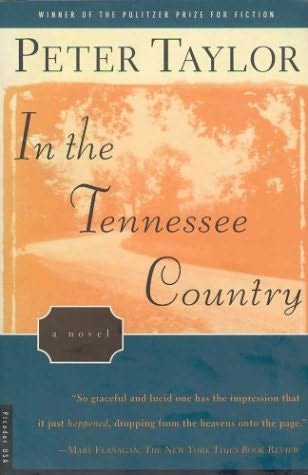
In the Tennessee Country: A Novel


In the Tennessee Country: A Novel

Jesus said to them, "A prophet is not without honor, except in his own country, and among his own relatives, and in his own household." (Matthew 13:57 and Mark 6:4)

“In the Tennessee country of my forebears, it was not uncommon for a man of good character suddenly to disappear. He might be a young man or a middle-aged man or even sometimes a very old man. Whatever the case, few questions were ever asked. Rather, it was generally assumed that such a man had very likely felt the urging of some inner compulsion and so could not do otherwise than gather up his chattels and move on to resettle himself elsewhere.”

The words of Jesus remind us of a truism in life, well known for thousands of years, the process of “moving away” in order to “find” oneself, one’s true identify in life. Many people must “move away” from the place of their upbringing and their families in order to find their own place in life. In many instances, people can find their own place in life only a short distance from their home places, retaining strong ties to their families. In other instances, people find that they must sever their ties to their families, at least for some period of time, in order to find their own place in life, the place in which they can feel comfortable and grow in life. In some instances, people find their own place in life by establishing a career that is very different from that demanded by their families; in other instances, people find that they must become different people completely from the person they had been. This internal urge to “move away” to “find oneself” is intensely powerful.

In this book, the author describes the effects of the “moving away” process on three men – his cousin Augustus, himself, and his youngest son. All of these people disappeared from their own immediate families to one extent or another in order to find their own places in life. To achieve the “honor” that they needed to feel for themselves. To find the deep happiness that comes from having found one’s true identity. This drive to find inner happiness is very powerful, the inner happiness that can come only from finding oneself, the self that one feels is real, rather than that imposed by family and friends.

In this book, the author describes the “moving away” of three men, but he does not identify the “moving away” process, the deep need for self-identification and self-fulfillment. Indeed, he seems to have no clue about this phenomenon that is so widely known. He describes the process for these men as if it were some mysterious process common only to men of his own area in Tennessee. As a result, he writes what must be one of the most boring books ever published without the thought ever dawning on his mind that these men were not “disappearing” from life, but “finding” life. And the possibility never occurs to him that perhaps the Holy Spirit guides people along the path to self-identification and self-awareness, rather than their simply dropping out of life and disappearing. As a result, he writes a book that is utterly useless and utterly boring, when it could have been so much deeper, so much more enlightening, so much more interesting. What a waste, and what a shame.

Tuesday, October 17, 2006

Kennedy Center -- 2007 Season

October 14 2006 - Twelve Angry Men - Eisenhower Theater, 7:30 p.m.

December 30, 2006 - The Light in the Piazza - Opera House, 7:30 p.m.

January 13, 2007 - Who's Afraid of Virginia Woolf? - Eisenhower Theater, 7:30 p.m.

March 3, 2007 - Carnival! - Eisenhower Theater, 7:30 p.m.

Plus one other play in June.

Monday, October 16, 2006

Twelve Angry Men

Twelve Angry Men was written in 1954, but it is still emotional and relevant today. Twelve men, in 1954, trying to decide the guilt or innocence of a teenager who was accused of murdering his father. Reviews from the Washington Post and Washington Times are on the Kennedy Center website, so I will not repeat them here. I had seen the movie, starring Henry Fonda, several times, and found myself interested in the way the protagonist found fault with the arguments of the District Attorney and eventually convinced his fellow jurors of the teen's innocence. Of course, the play is not about a trial and the deliberations of a jury, but about the way in which our life experiences and prejudices affect the way we think and feel about a situation. The play is about confronting those prejudices and overcoming them, at least for a moment. Because I had seen the movie several times, and knew that it was an emotional, angry play, I was very hesitant to go to the play. I like to be entertained and made to feel good by the entertainment that I pay for. I like to feel happy. I like musicals. I do not like to pay money to see anger or other deep emotions. This play is about anger. However, I have season tickets to the shows at the Kennedy Center, and this play was one of the ones in the package, so I went. And again I soon found myself deeply interested in the intellectual puzzling out of the case, and the anger was not so much a distraction. The actors were wonderful, with Richard Thomas playing the Henry Fonda part, and George Wendt playing the role of the jury foreman. In addition, the play is one act, and less than two hours long, which made it much more manageable to me. At the end, the actors received a well-deserved standing ovation, and I was pleased that I had gone.

Saturday, September 23, 2006

Spiritual Reflections

Ramadan and Rosh Hashanah provide Muslims and Jews an opportunity to reflect on their spiritual lives and renew their commitment to their faith. Christians do not have a similar holiday period of reflection, but perhaps Ramadan and Rosh Hashanah can serve that purpose, at least for me. It is good for me to reflect that God is Spirit, and He created all minds as part of His own Mind. His Mind is perfect, and all of His creations are perfect, remaining within His Mind and part of His Mind. His creations can never change, remaining forever a perfect part of His perfect Mind. Our only function while we are in this world is "forgiveness", a coming to perceive the Mind of God as it acts through our fellow man, overlooking the mistakes made by our fellow man, focusing our attention completely on the Spirit within him. This task is not easy for us to accomplish, but it is our only "salvation" from the "sins" of our fellow man. We are "saved" from his "sins" as we overlook them and focus on the perfect Spirit within him. "I am determined to see." A Course in Miracles.

An Enemy of the People

Although Henrik Ibsen wrote An Enemy of the People in 1882, it remains almost eerily current. The play was very well done and reminded us once again of its powerful message. The play was about a doctor in a small town in Norway, who discovered that the local healing baths were contaminated with bacteria and people were getting sick. He brought his finding to the town authorities, but they wanted to silence him because the local baths generated income for the town from tourists who came to the baths. He was horrified and tried to make his findings public; however, he was thwarted in his efforts, and the more he tried, the stronger the townspeople acted against him and his family. Finally, he was completely ruined.

The play reminds us that even today, "morality" must decide between public health and welfare on the one hand and public wealth on the other. Politicians depend for their very lives on money, so it seems that often they choose the financial well-being of their donors over the greater public good. Just last year, the arthritis drug Vioxx was found to increase the risk of heart attacks and stroke and it was withdrawn from the market. However, scientists at the Food and Drug Administration (FDA) testified before the Congress that the health threat of Vioxx had been known for more than two years, but they had been prevented from speaking about it. Even when action was finally taken to remove the drug from the market, the action was taken by the company making the drug, rather than the FDA. Just as when Ibsen wrote this play, the public must decide on the morality of their elected officials versus the morality of those who try to protect them from dangers to their health and their wealth. Inspectors General constantly face this same obstacle in trying to do their jobs. Ibsen remains current today, and one can only hope that eventually he will not be.

Saturday, September 16, 2006

The Notebook, by Nicholas Sparks


I have a brother. When we were growing up, we were very close, but then life led us to different coasts, three thousand miles apart. Our lives became quite different, and we gradually became less close. When I saw the Nicholas Sparks book, Three Weeks With My Brother, I thought it would be interesting and bought it. I did find it interesting, but even more interesting to me was Sparks' description of the start of his writing career, which was included in the book. He said that he was in a job that he did not like, and was complaining about it one day to his mother, and she said, "Stop complaining and write a book." Over the next several years, he wrote a book that became The Notebook. He told the story of how he struggled with the book, and how he struggled in finding an agent and then in selling the book to a publisher. I found that story very interesting.

I had never read a book by Nicholas Sparks, although he has written 11 novels. I had heard that he wrote romance novels, but I didn't really know much about him. Then this summer, I was given a copy of The Notebook, but still I was not interested enough to read it until now. It is a book that was on the New York Times bestseller list for more than a year, and a successful movie was made of the book.

So what did I think of the book? It is a very short book. It is the story of the beginning of a love, and the end. As I began to read the book, I found that the writing style was elementary, and I was quite put off by it. Feelings were badly expressed, sentences curt, words elementary. I found it difficult to read the book because of the elementary nature of the writing. However, it is a short book, and I continued to read it, and I found the second part of the book about the end of life very moving. I understand the popularity of the book, not because of the first part, but the second. It is not a great book, but it is a moving brief description of a couple dealing with Alzheimer's disease.

Tuesday, September 12, 2006

Life of Pi


To me the Life of Pi by Yann Martel is a children's book. It is a fantasy adventure story of a teen age boy. Reading the book was like returning to childhood. I found nothing adult about the book. Although some reviewers called the book a "fable", I do not agree; a fable has a moral, and I did not find a moral in this story. Other reviewers saw religious or spiritual symbolism in the book, but I did not. The first part of the book was about a teen age boy in India, and his interests in animals (his father was a zookeeper) and religion (he was interested in all religions). The main part of the book was a story of being lost at sea in a lifeboat with a 450 pound Bengal tiger. I found this part of the book somewhat boring, like his endless days at sea. I also found this part of the book to be perfect for a child, but really too much of an unrealistic fantasy for me. It was not adult. This book won the Man Booker Prize in 2002. I'm not sure if it won as a children's book or not, but if not, then I am not sure why it won. I would recommend the book to a child, but not to an adult.

Tuesday, August 29, 2006

The Death of Achilles


The Death of Achilles by Boris Akunin

Boris Akunin has written 11 mysteries with Erast Petrovich Fandorin, the detective reminiscent of Sherlock Holmes, although Fandorin also engages in violence in these stories. This is the fourth that has been translated. This book is interesting because the story is told in two separate parts. The first part is told from the perspective of Fandorin, as the previous books have been. However, the second part of the book is told from the perspective of Achimas Welde, Fandorin's adversary. In this book, Achimas is the far more interesting character, and is portrayed from a sympathetic viewpoint. These books are set in the Russia of the 1880s, and in each one, Fandorin is the protector of the Motherland. However, in this book, Achimas is also the protector of the Motherland, as he has been retained by the rulers to eliminate a military general who is a national hero, but who is leading a military overthrow of the government. Fandorin investigates, despite being ordered not to and even placed under house arrest to prevent his investigation from proceeding. As in all of the Fandorin mysteries, a beautiful woman is an integral part of the plot, and in this case, innocently so. The book is filled with murders and suspense, and danger for the innocent. Akunin informs the reader of the truth through Achimas, the killer, and builds sympathy for a happy outcome both for Achimas and the beautiful Wanda. However, in the end, Akunin chooses death for Achimas, while Achimas saves Wanda. I have now read the four Fandorin mysteries, and I will continue to read them as they are translated from Russian. However, I find them unsatisfying in some ways. First, Akunin finds it necessary to resort to fantasy in places that is a distraction and lessens the quality of the story. In addition, Akunin includes scenes that are completely out of character for his protagonists, also diminishing the quality of the story. And finally, Akunin always includes the death of sympathetic characters, and needlessly so. The books are entertaining, and interesting up to a point, but never rise above the level of "beach reading".

Tuesday, August 22, 2006

The Curious Incident of the Dog in the Night-Time

The Curious Incident of the Dog in the Night-Time by Mark Haddon, begins as a "murder" mystery, the murder of a dog and the attempt of a boy to find the murderer. However, the book is not at all a murder mystery, or even a mystery. This wonderful little book is about how autistic people think. The book is narrated by a 15 year old autistic boy, and one quickly realizes that the book is not about an incident, any incident, but about the way an autistic boy copes with life, and about how his parents cope with having an autistic child. This book is fascinating. It is written in a very simple language and style as it takes the reader through the thinking processes of an autistic child, and the terrible difficulties that his parents face in coping with him and taking care of him. But is it an accurate reflection of the thinking of an autistic child? That question was answered by the Amazon reviewer Autistic Moggy Mania, who describes herself as "happily autistic in Northern California". She wrote: "Mark Haddon absolutely "got it right" in this book. From descriptions of how overwhelming the man-made world is for us on a sensory level, to frustration with a society that expects us to learn how to recognize neurotypical facial expressions based on simple drawings -- I'm really impressed, everything really does reflect how many of us experience life." (Her complete review is well worth reading on the Amazon link above.) I found the book fascinating, and I highly recommend it.

Friday, August 18, 2006

Expresso Tales

Alexander McCall Smith has written many wonderful little books that leave his readers feeling good. His series of books on the No. 1 Ladies Detective Agency are a joy to read, as are his books on The Sunday Philosophy Club. However, this book did not leave me with the same happy feelings of those books. Last year, McCall Smith published the first of this series -- 44 Scotland Street -- which was first published as a series of 110 columns in the Scotsman newspaper in Edinburgh. The book chronicles the lives of the residents of an apartment building at that address in Edinburgh. Each chapter in the book is approximately three pages long, the length of the newspaper column for that edition. This latest book in that series -- Expresso Tales -- was first published as a series of 105 additional columns and continues to chronicle the lives of the same residents, along with their friends, families and acquaintances.

McCall Smith describes the people with such color that he makes them seem real. Their characters are full and rich. However, the problem I have with this book is that the characters in the book are incredibly boring people who lead incredibly boring lives. Each one is flawed in ways that make them unattractive, and they do nothing interesting at all in their lives. The author seems to take pleasure in creating quirky characters, and to write amusing little stories about their quirkiness. In a few instances, one of the characters almost does something interesting, or attempts to do something interesting, but McCall Smith quickly makes the attempt fail in an embarrassing way, and the character hurries to return to his or her boring life, grateful for not being successful in adding any pleasure or joy to his or her life. The characters have no vitality, no life, no joy. They are boring people who lead boring lives.

And yet, McCall Smith includes nuggets of beauty, such as this: "She had to share her joy, as Lou knew that joy unshared was a halved emotion, just as sadness and loss, when borne alone, were often doubled."

The Shakespeare Theater -- 2007 Season

My tickets arrived for the 2007 Season at the Shakespeare Theater. It will be an interesting year, and I am looking forward to it. My schedule is as follows:

An Enemy of the People 9/21/06 8:00 p.m.
Beaux Stratagem 12/21/06 8:00 p.m.
Richard III 2/22/07 8:00 p.m.
Titus Andronicus 5/10/07 8:00 p.m.
Hamlet 7/12/07 8:00 p.m.

Tuesday, August 15, 2006

Little Women, the Broadway Musical

As the review in the Washington Post said, Little Women is the "most powerful girly book this country's ever produced." It is hard to find a woman who has not read the book, and it is equally hard to find a man who has. The book has been in print continuously since 1868, and never falls from the Top 10 list of all-time bestsellers. There have been two major film versions of the book, starring Katharine Hepburn in 1933 and June Allyson in 1949, and another version in 1994, starring Winona Ryder. And last season saw the opening of the very successful Broadway musical, starring Maureen McGovern.

As I expected, The Kennedy Center was filled with women and teenage girls who had read the book, or little girls who were taken to see the show by their mothers who had read the book. As for me, although I had never read the book, I found the show enjoyable to an extent. I was not put off by the very female perspective of the story, and I enjoy musicals very much. However, certain technical aspects of the production were less than optimal. The biggest problem was that the orchestra completely overwhelmed the voices of the singers. For a theater like the Kennedy Center, that should not have happened. The words were almost impossible to hear. Maureen McGovern was great, and some of her words were understandable. However, the actor who played Jo did not have a strong voice, and she was completely overwhelmed by the orchestra. It was very unfortunate. All in all, however, the women had a wonderful time at the theater, remembering the story and reliving the time that they read the book for the first time.

Friday, June 30, 2006

Love's Labor's Lost

For centuries the Kingdom of Navarre was the premier independent Basque kingdom in the world. In the 1580's and 1590's, the King of Navarre was a protestant and ally of England. This King sponsored an academy at his court, and actually associated with lords named Biron and Longueville. This King actually wed a French princess, Marguerite, daughter of Catherine de Medici, and prior to the marriage, these two women made visits to Navarre, along with a group of ladies-in-waiting of the French court. The wit and charm of this group of French ladies earned them the name "l'escadron volant" (the flying squadron). The King of Navarre actually wed Marguerite, and changed his religion to Catholic in order to become the King of France, thus becoming the enemy of England, rather than its ally.

Shakespeare's play, Love's Labor's Lost (Shakespeare Theater), is a comedy spoof about how the French ladies visited the King of Navarre and completely outwitted the King and his consorts, the Lords Berowne, Longaville and Dumaine, causing them to abandon their vows to withdraw from the world for a period of three years into the King's academy to seek knowledge and enlightenment. The women outwitted these men, outtalked them, and completely outclassed them. They never for a moment took these shallow men or their professions of love seriously, realizing that they would abandon their vows of love as quickly as they abandoned their vows of austerity. In the end, the women left the men and returned to France, telling the men that if their love was true, they would withdraw from the world and live in austerity for one year (not three). Thus were "love's labors" of the men "lost" as the women departed.

Adding to the wit of the play was the reversal of roles for men and women in England in the 1590s (the time of the play). In the customs of that time, women were the weaker gender, while men were the stronger. In the play, Shakespeare poked fun at the King and his consorts by making them appear as weaklings, completely overpowered by the intellect of the women. Although modern TV sitcoms have portrayed women as smart and men as bumblers, women and men had not been portrayed in that way at the time of the play.

The play was light, airy and fun. Of course, Shakespeare was his usual self in filling the play with words, words, words, and witicisms on top of each other. This play also included more rhyme than usual in Shakespeare plays, making it both more witty and also more interesting. As usual, it is hard to follow a Shakespeare play because of the different language of 400 years ago, and because of the speed of the delivery of the lines. In order to follow the dialogue, one must read the dialogue and become familiar with it before seeing the play.

This adaptation of the play was set in 1960's costumes; it also included the setting of some of the dialogue to music. I found the costumes somewhat distracting at times in contrast to the language being spoken by the actors, but the music was very playful and enlivened the play. All in all, it was a fun performance.

Here is the Washington Post review of the play.

Blue Shoes and Happiness


Blue Shoes and Happiness by Alexander McCall Smith is another in the series of wonderful little books about The No. 1 Ladies Detective Agency located in Botswana. These little books are like a cool refreshment on a hot summer's day -- they lift one's spirits and bring joy. Like a soothing massage when one is weary or tense, they bring comfort and relaxation to soothe the difficulties of one's daily life. These little books bring love and forgiveness; they bring hope and peace. What a deep pleasure it is to be invited into the lives of Mma Precious Ramotswe and her able assistant Mma Grace Makutsi. One can never get enough joy in life, or peace of mind, or hope, and one can never get enough of the one who brings such joy and peace through these little books. I love these little books because I love the way they make me feel when I read them -- wonderful.

Thursday, June 15, 2006

The Far Pavilions by M. M. Kaye

The Amazon reviewer, “Wysewomon”, gives The Far Pavilions by M. M. Kaye four stars. I agree with her, and I like her review of the book very much. This book is long – 960 pages – and it continues my reading of novels set in India. For me, this book is not as good as A Suitable Boy or Shantaram, but it is a good book. I would give those books five stars, and this one four stars.

In The Far Pavilions, Kaye uses two principal characters to describe numerous personal and cultural conflicts in India in the mid-1800s – the principal character, Ashton Pelham-Martyn and his love, Anjuli. Ashton was born in India of British parents. His mother died at childbirth, and his father died when Ashton was six years old. Until he was 11 years old, Ashton was raised as Ashok by his Hindu nurse, Sita; his dark complexion and hair permitted Sita to raise Ashok as her son for safety reasons. At her death, he learned that he was actually English, and he was sent to England for schooling. After school, he joined the British military (the Guides) and returned to India. One of the principal conflicts of the entire book was the internal conflict that Ashton experienced between being British but feeling Indian.

While Ashton/Ashok was a young boy, he and Sita were servants at the palace of an Indian Maharaja, where Ashok played with a little girl, Anjuli, who was a half-caste princess. Her mother was Russian, and her father was the Maharaja. Because of her half-caste heritage, she too experienced conflict, along with the conflict among the wives and children of the Maharaja. But Anjuli and Ashok became fast friends as children, leading to their lifelong romance.

A second principal conflict that Kaye describes through Ashton is the conflict regarding the British military in India, particularly the conflict arising from the determination of the British military to establish control over Afghanistan during that period. Much of the second half of the book concerns this conflict, and for me, the book really dragged in this part. That is the reason that I give it four stars rather than five.

Kaye’s story of Ashton’s return to India as a military officer and his “accidental” finding of Anjuli again as a young adult was very well done. Kaye’s description of the trials of Anjuli as a half-caste was also fascinating reading. Throughout the book, Kaye painted a beautiful picture of the love between Ashton and Anjuli, and the difficulties and conflicts that arose resulting from the forbidden love between a British military officer and a Hindu. Also throughout the book, Kaye presented interesting descriptions of the conflicts among the various religions and cultures in India, in particular, Hindu, Islam, and the British Christian religions and cultures.

In the end, the forbidden nature of their love, her half-caste heritage, and a variety of other unaccepted realities led Ashton and Anjuli to become new, different identities, who could find acceptance and live peacefully.

Mame

On Saturday evening, June 10, I went to the Kennedy Center
to see the show, Mame, and it was really wonderful. It is odd that I have seen hundreds of Broadway shows, but never before had I seen Mame. It is such a happy show, and the music is really wonderful. I love going to the Kennedy Center, and on a Summer evening, it is even better than usual. They open up all the doors in the Great Hall and let everyone go out on the terrace overlooking the Potomac River. It is really beautiful. Everyone is happy and enjoying themselves. And then to see a really upbeat, happy show is really great. I love seeing musicals, and I love seeing happy shows. I am not one who usually likes to go to a Broadway show to see drama. Tennessee Williams is not a happy experience for me. I like musicals, and Mame is one of the all-time greats. The non-musical "Auntie Mame" was first performed on Broadway in 1958, starring Rosalind Russell, and the musical Mame was first performed in 1966, starring Angela Lansbury (see History of Auntie Mame).

It is odd that the women who have played Mame have not been strong singers, and Christine Baranski, who stars in this version, is not a strong singer. She was fine in the performance; she fit the role of the doting aunt. But I would have enjoyed it more if she had been a stronger singer. And like so many shows, if the show had stopped at intermission, it would have been better. It is odd that so many shows are great before intermission, but weak in the second act, and this show was no exception. Still, it was a wonderful show that left everyone singing and skipping out of the theater.

The Persians

Reserve.