Two free daily newspapers are handed to passengers each morning as they enter the Metro system, the "Express" published by the Washington Post, and the "Examiner", published independently. Usually, I scan both of them as I commute to work, a trip of about 45 minutes. On June 23 as I read the "Examiner", I noticed an advertisement announcing the start of a little contest. Each day for 10 days, a question would be printed in the "Examiner" related to the Royal Caribbean Cruise Lines ship, the Grandeur of the Seas, or about the Port of Baltimore. At the end of the contest, 10 winners would be selected by a drawing, and winners would receive a tour of the ship and lunch aboard the ship on July 22, as the ship was docked in Baltimore. I decided to enter the contest for fun.
I looked up the answer to the first question, and made a note of it, and each day, I continued to look up the answer to that day's question and note it. As I went along, I began to realize that very few people would enter this contest, both because it was spaced out over more than 10 days (no paper on Sundays) and because finding the answers online was not always easy. Making the contest more difficult was the fact that it ran over the July 4th holiday. I began to think that my chances of winning might be good. At the end of the contest, I emailed my answers to the questions to the Examiner, and the following week, I was notified that I had won and would be one of not 10 but 25 people to take the tour. During the tour, I learned that 286 correct responses had been received, although probably not more than 50 people had actually participated, and they had given the answers to friends.
So, on Sunday, July 22, I drove over to Baltimore to the Port and took the tour of the ship. I learned that access to the Port of Baltimore is extremely easy; the Port is located directly beside Interstate 95 in Baltimore, at Exit 55. Parking is also extremely easy; it right beside the ship. When I arrived at the port, I noticed that this ship seemed smaller than other ships I have cruised in the past, and that turned out to be true. At lunch, I sat beside the manager of the Port of Baltimore, and one thing I learned from him was that the larger ships are not able to use the Port of Baltimore because they are too tall to pass beneath the Chesapeake Bay Bridge, which is only 192 feet above the water surface. Most cruise ships are taller than that. So this ship was smaller than other cruise ships, and that is the reason that it was able to use the Port of Baltimore.
I posted a few photos of my tour on my Flickr site.
Here are the contest questions and answers:
June 23 – What are the four different itineraries (not ports) that Royal Caribbean sails from the Port of Baltimore in 2007?
Answer:
(1) 5 Night Bermuda Cruise
(2) 9 Night New England/Canada Cruise
(3) 9 Night Eastern Caribbean Cruise
(4) 13 Night Baltimore to Tampa Cruise
June 24 – No newspaper.
June 25 – What is the charge per day for passenger cars to park at the Port of Baltimore cruise terminal? Answer: $10 per day.
June 26 – What is the Grandeur of the Seas passenger capacity? Answer: 2,446 passengers.
June 27 – How many nights is the Royal Caribbean cruise from Baltimore to Bermuda? Answer: 5 nights.
June 28 – When is the last cruise out of the Port of Baltimore with Royal Caribbean for the 2007 season? Answer: November 25 – Grandeur of the Seas to Bermuda.
June 29 – What time does the Port of Baltimore open for departing cruise passengers? Answer: The cruise terminal entrance opens at 10:00AM for departing passengers; however, do not arrive prior to the embarkation time on your ticket.
June 30 – Are most meals (except for specialty restaurants) covered in the prices? Answer from the RCCL Cruise FAQs: The price of your vacation includes: Most meals onboard. The cruise price does not include meals ashore (except as noted) and certain beverages and specialty restaurants onboard certain vessels.
July 1 –No newspaper.
July 2 – How far is the Port of Baltimore's cruise terminal from BWI Thurgood Marshall Airport: Answer: BWI is located 10 miles south of Baltimore City, and it is just 9.6 miles from Maryland’s cruise terminal at South Locust Point.
July 3 – How long and wide (beam) is the Grandeur of the Seas? Answer: Length – 916 feet; Beam – 106 feet.
July 4 – What is the website address for the Baltimore Area Convention and Visitors Association? Answer: www.baltimore.org
Sunday, July 29, 2007

Sunday, July 15, 2007
Three Cups of Tea, Greg Mortenson and David Oliver Relin

Three Cups of Tea by Greg Mortenson and David Oliver Relin
So much has been written about this book and the work of Greg Mortenson that I am reluctant to write more here. The reviews of the book on Amazon cover everything that needs to be said. For me, this is one of the most inspiring books I have read in a long time. I believe that every American should read this book. We can do so much better in our foreign policy than we have been doing, and this book shows the way that many Americans would prefer to follow. A path of peace and friendship. I hope that someday Greg Mortenson will be awarded the Nobel Peace Prize.
Some reviewers seem not to have cared for the writing style of Relin, but to me, it was outstanding. Indeed, the writing is what initially drew me into the book and made it so hard to put down. I really liked the writing style of Relin.
One interesting tidbit: it is interesting to me how frequently great achievers are eccentric. Greg Mortenson is an eccentric loner, as so many other great achievers have been. Yet, his eccentricities are fundamental to his success. The hope is that his work will be self-sustaining after he is no longer able to continue to do all that he has done, just as one hoped that the work of other great people would continue after their times. Thank God for Greg Mortenson.
Key Web Sites:
Three Cups of Tea
Central Asia Institute
YouTube "CAI schools"
Greg Mortenson
Saturday, July 14, 2007
Hamlet, William Shakespeare
Hamlet by William Shakespeare at the Shakespeare Theater
Hamlet is not one of my favorite Shakespeare plays. I don't care for all the "drama"; it is too much, really. More than drama, it is "melodrama".
Background of the play from the program:
The character of Hamlet first appears as “Amleth,” in the writings of the 12th-century Danish historian Saxo. Amleth’s uncle murders the prince’s father and marries his mother, and Amleth pretends to be insane in order to get his revenge. The narrative ends with Amleth killing his uncle and taking the throne. The story reached England through the 16th-century French author François de Belleforest, who enlarged the role of Amleth’s mother and gave him a young female love interest. Sometime in the 1580s, an English writer seems to have adapted Belleforest’s tale into a stage play called Hamlet.
Apparently using this earlier Hamlet as inspiration, Shakespeare created his own version in 1600 for the newly opened Globe Theatre. He wrote the play at the midpoint of his long career, turning from poetic comedies and histories to revolutionary tragedies and romances. But exactly what play that first audience heard remains a mystery, because the published texts of Hamlet vary widely. In 1603, an inexpensive quarto edition was issued to capitalize on the play’s popularity. It was likely a pirated text, either copied hastily by a spectator or reconstructed badly from memory by an actor in a minor role. A second quarto came out the next year in response, billing itself as “newly imprinted and enlarged to almost as much again as it was, according to the true and perfect copy.” The 1623 folio of Shakespeare’s complete works contained a version of Hamlet very similar to the second quarto, cutting about 200 lines (although it would still run more than four hours uncut).
My thoughts:
My first thought is that as he did in other plays, Shakespeare developed this play based on an earlier work by someone else. It is remarkable to me that he "rewrote" a play by the same name that had been written and performed only 20 years previously. Copyright laws would pevent that from happening today.
Shakespeare was a technical genius who had a great ability to write and produce successful plays. He took ideas from others and reworked them technically to produce successful plays. In his time, audiences seem to have been attracted to great violence, and as he did in other plays, Shakespeare killed off all the main characters in Hamlet in a very melodramatic fashion, the guilty and the innocent alike. But before they died, they first went through great melodramatic wailings.
This play was about revenge, and to be successful, Shakespeare developed a character so bent on revenge that he was willing to die in order to gain his revenge. In addition, he was willing to kill innocent people in order to gain his revenge. Thus, the play reminds us of political suicide killers of today, as well as the armies who seek to kill them and kill thousands of innocent people in the process. The only moral is that they are all equally insane, and their insanity hurts everyone.
Hamlet is not one of my favorite Shakespeare plays. I don't care for all the "drama"; it is too much, really. More than drama, it is "melodrama".
Background of the play from the program:
The character of Hamlet first appears as “Amleth,” in the writings of the 12th-century Danish historian Saxo. Amleth’s uncle murders the prince’s father and marries his mother, and Amleth pretends to be insane in order to get his revenge. The narrative ends with Amleth killing his uncle and taking the throne. The story reached England through the 16th-century French author François de Belleforest, who enlarged the role of Amleth’s mother and gave him a young female love interest. Sometime in the 1580s, an English writer seems to have adapted Belleforest’s tale into a stage play called Hamlet.
Apparently using this earlier Hamlet as inspiration, Shakespeare created his own version in 1600 for the newly opened Globe Theatre. He wrote the play at the midpoint of his long career, turning from poetic comedies and histories to revolutionary tragedies and romances. But exactly what play that first audience heard remains a mystery, because the published texts of Hamlet vary widely. In 1603, an inexpensive quarto edition was issued to capitalize on the play’s popularity. It was likely a pirated text, either copied hastily by a spectator or reconstructed badly from memory by an actor in a minor role. A second quarto came out the next year in response, billing itself as “newly imprinted and enlarged to almost as much again as it was, according to the true and perfect copy.” The 1623 folio of Shakespeare’s complete works contained a version of Hamlet very similar to the second quarto, cutting about 200 lines (although it would still run more than four hours uncut).
My thoughts:
My first thought is that as he did in other plays, Shakespeare developed this play based on an earlier work by someone else. It is remarkable to me that he "rewrote" a play by the same name that had been written and performed only 20 years previously. Copyright laws would pevent that from happening today.
Shakespeare was a technical genius who had a great ability to write and produce successful plays. He took ideas from others and reworked them technically to produce successful plays. In his time, audiences seem to have been attracted to great violence, and as he did in other plays, Shakespeare killed off all the main characters in Hamlet in a very melodramatic fashion, the guilty and the innocent alike. But before they died, they first went through great melodramatic wailings.
This play was about revenge, and to be successful, Shakespeare developed a character so bent on revenge that he was willing to die in order to gain his revenge. In addition, he was willing to kill innocent people in order to gain his revenge. Thus, the play reminds us of political suicide killers of today, as well as the armies who seek to kill them and kill thousands of innocent people in the process. The only moral is that they are all equally insane, and their insanity hurts everyone.
Wednesday, June 20, 2007
A Thousand Splendid Suns, Khaled Hosseini

A Thousand Splendid Suns by Khaled Hosseini
Violence against women is widespread throughout the world. Statistics are difficult to obtain, but even with limited statistics, one-fourth to one-third of the women of the world report being abused by husbands or partners, and police believe that only one-third of instances of domestic violence are reported. Violence against women occurs in all societies, including the United States and Europe.
In some societies, women and girls are dominated by males and treated as property, as slaves, whose principal purpose in life is to serve their husbands. They are given in marriage and expected to serve and obey their husbands, and if they fail in this duty, they are subjected to violence. If they try to escape, they are subjected to violence. They have virtually no individual freedoms in life.
This book is about two women who become slaves to a husband. One of the women grows up as an illegitimate girl who is not accepted by her father; the other grows up as the favored daughter of a university professor. Both become the wife to a man who has been taught and believes in the customs of his society -- that women are slaves to their husband. Although they are of different ages and different backgrounds, they are treated the same by their husband. They become his wives at different times, twenty years apart, and at first, the older one resents the younger one. However, their treatment by their husband leads them eventually to become friends and allies in their attempt to escape their slavery.
This book is about domestic violence and customs in Afghanistan; however, it could have been written about domestic violence in many societies. Although women are not treated as slaves in all societies, women are subjected to violence by their husbands in all societies. The author was born in Afghanistan and lived there for eleven years. He went back to visit in 2003, and after meeting and talking with many women, decided to write this book about customs regarding women in Afghanistan. I do not know how accurately it depicts life for women in Afghanistan. It is a book of fiction, and not a sociological study.
This book is not a great book, but it is a book that captures one's attention and emotions. It is an interesting story, and it is believable. In order for me to like a book, I must find it believable. I like this book much better than Kite Runner because as I have mentioned previously, I found much of Kite Runner to be unbelievable melodrama. This book is sad. It is not a happy book. The lives of these women were sad, unhappy lives. But I found it interesting to read about the lives of women in that society. All in all, I liked this book.
Tuesday, May 15, 2007
Titus Andronicus
Titus Andronicus by William Shakespeare at the Shakespeare Theater
It is hard to imagine Shakespeare as a young man. We think of the great Shakespeare plays, and we do not think of him as a young man just getting started in the theater, just learning his craft, just beginning to write plays. This play, Titus Andronicus, was one of Shakespeare's first plays, written sometime between 1587 and 1592. He was only in his mid-twenties. Plays that were popular in London at that time were horror plays, much like horror movies of today. It is easy to imagine the young Shakespeare, in his mid-twenties, deciding to write a horror play, filled with lurid violence and gore and much like two plays that were very popular at that time, Marlowe's Tamburlaine and Thomas Kyd's The Spanish Tragedy. Undoubtedly, the young Shakespeare desired to become successful and decided to write a play like other successful plays. In Titus Andronicus, Shakespeare one-upped other playwrights. His play was even bloodier than theirs. And it was very successful.
Although Shakespeare's later plays were based on historical events or historical figures, this play was purely fictional. The play refers to historical Rome, but the figures in the play and the events in the play were fictional. However, it is interesting that Shakespeare had great knowledge of ancient Rome and was able to base this play and later plays on that period. It is also interesting to me that the London audiences -- mostly men -- related to those historical references.
I was expecting to be revolted by the blood and gore of the play, but I found that I was not. I was fascinated by the play itself. I was fascinated by a young man writing this play, both to entertain and to be a successful business venture. I found it not sad or depressing, but comical, much like one feels at a horror movie. The purpose was to entertain, and this play was entertaining. It turned out to be one of Shakespeare's most successful plays.
It is hard to imagine Shakespeare as a young man. We think of the great Shakespeare plays, and we do not think of him as a young man just getting started in the theater, just learning his craft, just beginning to write plays. This play, Titus Andronicus, was one of Shakespeare's first plays, written sometime between 1587 and 1592. He was only in his mid-twenties. Plays that were popular in London at that time were horror plays, much like horror movies of today. It is easy to imagine the young Shakespeare, in his mid-twenties, deciding to write a horror play, filled with lurid violence and gore and much like two plays that were very popular at that time, Marlowe's Tamburlaine and Thomas Kyd's The Spanish Tragedy. Undoubtedly, the young Shakespeare desired to become successful and decided to write a play like other successful plays. In Titus Andronicus, Shakespeare one-upped other playwrights. His play was even bloodier than theirs. And it was very successful.
Although Shakespeare's later plays were based on historical events or historical figures, this play was purely fictional. The play refers to historical Rome, but the figures in the play and the events in the play were fictional. However, it is interesting that Shakespeare had great knowledge of ancient Rome and was able to base this play and later plays on that period. It is also interesting to me that the London audiences -- mostly men -- related to those historical references.
I was expecting to be revolted by the blood and gore of the play, but I found that I was not. I was fascinated by the play itself. I was fascinated by a young man writing this play, both to entertain and to be a successful business venture. I found it not sad or depressing, but comical, much like one feels at a horror movie. The purpose was to entertain, and this play was entertaining. It turned out to be one of Shakespeare's most successful plays.
Monday, May 14, 2007
The Good Husband of Zebra Drive, Alexander McCall Smith

The Good Husband of Zebra Drive by Alexander McCall Smith
Like worn house slippers, the books about Precious Ramotswe of the No. 1 Ladies' Dectective Agency make one feel comfortable. Precious is indeed precious. Her keen observations of life are equally useful in solving the cases that confront her and in her interpersonal relationships. She understands the weaknesses of people, and she forgives them for those weaknesses. She practices love, and she teaches love. Always the solutions to relationships and to her cases return to her observations about life and love, and almost always relationships and cases end happily. The beauty of the simple life of her beloved Botswana adds to the beauty of the message that she conveys, a message of love and hope. These books are written in a simple way, emphasizing the simplicity of the setting and the message. While not great literature, these books make one feel comfortable and satisfied and happy. They are wonderful little books, and I never grow tired of them.
Wednesday, May 09, 2007
The Inheritance of Loss, Kiran Desai

The Inheritance of Loss by Kiran Desai.
Although this book is the 2006 winner of the Man Booker Prize, it receives only 3.5 stars from Amazon reviewers, many of whom find it to be well written, but with little plot. Indeed, many reviewers find the book boring, some to the point of not being able to finish it.
As I have written before, it seems that although some writers are gifted with words and gifted at capturing the descriptions of people or events, they have difficulty imagining great stories. Kiran Desai is a gifted writer. Her descriptions are far more elegant than those of most writers. Indeed, the elegance of her descriptions is almost mesmerizing. However, her story lacks interest. Her characters seem to drift and her story drifts. It seems that the title of the book is accurate -- the characters are a bunch of losers who go on losing right to the end of the book. Finally, we just don't care what happens to them. Surely she could have imagined more interesting characters and a more interesting story. The title of this book could just as easily have been, "Everyone's a Loser".
Tuesday, May 08, 2007
Coriolanus
Pride goeth before destruction, and an haughty spirit before a fall. (Proverbs 16:18)
Coriolanus by the Royal Shakespeare Company at the Kennedy Center. One of Shakespeare's great tragedies, Coriolanus depicts a man who could have had greatness, but lost everything because of a fatal character flaw. Coriolanus was filled with pride and a haughty spirit, which led to his downfall. The play was great, and the performance by the Royal Shakespeare Company was excellent. The one drawback was that the theater at the Kennedy Center is too large for good hearing. The smaller theater at the National Shakespeare Theater is always much better for Shakespeare plays. Still, an outstanding play, and as always, reading Asimov's Guide to Shakespeare before going to the play helped immensely to understand the nuances of the play.
Coriolanus by the Royal Shakespeare Company at the Kennedy Center. One of Shakespeare's great tragedies, Coriolanus depicts a man who could have had greatness, but lost everything because of a fatal character flaw. Coriolanus was filled with pride and a haughty spirit, which led to his downfall. The play was great, and the performance by the Royal Shakespeare Company was excellent. The one drawback was that the theater at the Kennedy Center is too large for good hearing. The smaller theater at the National Shakespeare Theater is always much better for Shakespeare plays. Still, an outstanding play, and as always, reading Asimov's Guide to Shakespeare before going to the play helped immensely to understand the nuances of the play.
Monday, March 05, 2007
Carnival!
Carnival! at the Kennedy Center, Saturday March 3, 2007
Carnival! the musical first appeared on Broadway in 1961; the musical was based on the 1953 movie, "Lili", starring Leslie Caron. The movie was based on a short story that appeared in the Saturday Evening Post in 1950, called "The Man Who Hated People". The story is about a young woman (mid to late teens) whose parents had died, and she went to find a good friend of her father's who worked in a carnival and who would take care of her. Unfortunately, he too had died just a month before she arrived. Having no place to go, she stayed with the carnival.
She was an innocent girl, who did not understand when the star of the show, the magician -- tried to take advantage of her. To survive, she began to work in the carnival's puppet show. She loved the puppets, and because of her innocent interaction with them, the puppet show became the greatest attraction at the carnival. The puppeteer was a man who had been a dancer, but who had an injury that had cut his career short. He had become very angry and mean -- the "man who hated everyone". So the show was about a conniving man and a very angry, mean man pitted against this innocent girl. This conflict went on and on, and it was very disturbing to me. In the end, like the Beauty and the Beast, through her love and kindness, she was able to tame the mean man and make him nice and loving like her, but by then, I didn't even want that. I just wanted her to be rid of these people, and I wanted to be rid of the show.
The show disturbed me. I did not like it at all. I am accustomed to seeing great shows, so when I see one that is not good, it seems even worse than it probably is in reality. But this one disturbed me. I was not amused by this particular conflict. I am certainly not opposed to elusive, unavailable men, but I don't like mean people, and I don't like older men who take advantage of young girls.
At a more basic level, this story is ancient -- the story of the attraction of "bad boys" to women. The eternal temptation, bad boys have tempted women in Virgil's Dido, Shakespeare's Helena, Jane Austen's Elizabeth Bennett, Margaret Mitchell's Scarlett O'Hara, The Beauty and The Beast. Women always seem to fall for bad boys. Bad boys are often not handsome, but they are masculine and elusive and unavailable, the perfect ingredients for sexual attraction. Although bad boys are tamed in stories, in real life they seldom are. In real life, women must decide whether they want a man who stimulates them sexually, or a "good man" who will be a good husband and partner. Seldom will a woman find one who is both. Often nowadays, women choose both a good man for a husband, and a "bad boy" as a lover. The perfect solution to the eternal problem!
Playbill story.
Carnival! the musical first appeared on Broadway in 1961; the musical was based on the 1953 movie, "Lili", starring Leslie Caron. The movie was based on a short story that appeared in the Saturday Evening Post in 1950, called "The Man Who Hated People". The story is about a young woman (mid to late teens) whose parents had died, and she went to find a good friend of her father's who worked in a carnival and who would take care of her. Unfortunately, he too had died just a month before she arrived. Having no place to go, she stayed with the carnival.
She was an innocent girl, who did not understand when the star of the show, the magician -- tried to take advantage of her. To survive, she began to work in the carnival's puppet show. She loved the puppets, and because of her innocent interaction with them, the puppet show became the greatest attraction at the carnival. The puppeteer was a man who had been a dancer, but who had an injury that had cut his career short. He had become very angry and mean -- the "man who hated everyone". So the show was about a conniving man and a very angry, mean man pitted against this innocent girl. This conflict went on and on, and it was very disturbing to me. In the end, like the Beauty and the Beast, through her love and kindness, she was able to tame the mean man and make him nice and loving like her, but by then, I didn't even want that. I just wanted her to be rid of these people, and I wanted to be rid of the show.
The show disturbed me. I did not like it at all. I am accustomed to seeing great shows, so when I see one that is not good, it seems even worse than it probably is in reality. But this one disturbed me. I was not amused by this particular conflict. I am certainly not opposed to elusive, unavailable men, but I don't like mean people, and I don't like older men who take advantage of young girls.
At a more basic level, this story is ancient -- the story of the attraction of "bad boys" to women. The eternal temptation, bad boys have tempted women in Virgil's Dido, Shakespeare's Helena, Jane Austen's Elizabeth Bennett, Margaret Mitchell's Scarlett O'Hara, The Beauty and The Beast. Women always seem to fall for bad boys. Bad boys are often not handsome, but they are masculine and elusive and unavailable, the perfect ingredients for sexual attraction. Although bad boys are tamed in stories, in real life they seldom are. In real life, women must decide whether they want a man who stimulates them sexually, or a "good man" who will be a good husband and partner. Seldom will a woman find one who is both. Often nowadays, women choose both a good man for a husband, and a "bad boy" as a lover. The perfect solution to the eternal problem!
Playbill story.
Friday, February 23, 2007
Who's Afraid of Virginia Woolf
Who's Afraid of Virginia Woolf at the Kennedy Center, January 13, 2007
Wednesday, February 21, 2007
The Audacity of Hope, Barak Obama

The Audacity of Hope by Barak Obama
Seldom does a politician write a book, and even more seldom does a politician lay out his political views on a wide range of subjects in a way that everyone can read and understand. Most politicians do not write books at all, although many politicians who seek the Presidency have staff write position papers and sometimes books for them. Politicians prefer to keep their positions on issues flexible and open in order to attract the most voters; stated positions offend voters as well as attract them.
In writing this book, Obama took the step of summarizing not only his positions on issues, but also his way of arriving at positions, his thought process, his personality traits. He wrote this book soon after being elected to the Senate, and well before he decided to seek the Presidency. His purpose seems to have been to summarize for himself his thoughts about key issues facing our nation. I am not aware of any other Senator or Representative who has done this, and for that reason, Obama is a very rare politician. Obama showed in his previous book that he is an outstanding writer, and again in this book, his writing style is eloquent and easy. This book is not as "readable" as his first book because a book about public policy is not as interesting as a book about his lifestory.
As an individual who has spent many years in Washington political work, I am struck by what Obama has done in writing this book in two ways. First, by writing this book, he has shown his intellect to be far greater than that of most other politicians. Few other politicians could have written this book or any book about a wide range of public policy issues. In addition to writing about his own positions on issues, he took the added step of writing about the history of many of those issues and the Constitutional background of the issues. In this book, Obama demonstrates his knowledge of American history and Constitutional law, his analytical abilities, and his facility with the American language. This book is a remarkable feat for a politician (or anyone), just as his first book was a remarkable feat for a young man just out of law school.
Second, in this book, Obama takes a step that is completely out of touch with the political norm in Washington at this time -- he takes a middle ground on most issues, seeking to unite people behind a compromise approach. He writes about both politicial viewpoints on issues, and then suggests that the solution to the issues lies somewhere between those points. He demonstrates that he understands the reasoning and feelings of people who take both sides on issues, and values their reasoning and feelings, and he offers a solution that lies between the two sides. Almost no other politician takes this approach to political issues. Most politicians strive to harden positions, rather than to find ways to bridge them and unite the two sides; they take this approach in order to firm their support with their base, fearing loss of support by taking a middle position.
Most politicians prefer no solution to a problem, no matter how serious, rather than a compromise solution. Our electorial process requires this extreme approach. The extremists are the ones who vote in our primaries, and to win the primaries, politicians must take extreme positions on issues. Politicians who would like to unite people do not win primaries, even though they might win general elections handily. However, Obama takes the approach that a compromise is the best solution, particularly if the compromise can unite people. When Obama speaks about the need to change the ways of Washington politics, it is the concept of seeking to unite rather than divide that he has in mind. This political approach is extremely rare. It is also one that many Americans seem to desire.
This book does indeed have the "Audacity of Hope". The hope that a man who is intellectually brilliant and articulate, and who advocates a unity position on issues, can win elections in America. We will see if that hope is realized.
Seldom does a politician write a book, and even more seldom does a politician lay out his political views on a wide range of subjects in a way that everyone can read and understand. Most politicians do not write books at all, although many politicians who seek the Presidency have staff write position papers and sometimes books for them. Politicians prefer to keep their positions on issues flexible and open in order to attract the most voters; stated positions offend voters as well as attract them.
In writing this book, Obama took the step of summarizing not only his positions on issues, but also his way of arriving at positions, his thought process, his personality traits. He wrote this book soon after being elected to the Senate, and well before he decided to seek the Presidency. His purpose seems to have been to summarize for himself his thoughts about key issues facing our nation. I am not aware of any other Senator or Representative who has done this, and for that reason, Obama is a very rare politician. Obama showed in his previous book that he is an outstanding writer, and again in this book, his writing style is eloquent and easy. This book is not as "readable" as his first book because a book about public policy is not as interesting as a book about his lifestory.
As an individual who has spent many years in Washington political work, I am struck by what Obama has done in writing this book in two ways. First, by writing this book, he has shown his intellect to be far greater than that of most other politicians. Few other politicians could have written this book or any book about a wide range of public policy issues. In addition to writing about his own positions on issues, he took the added step of writing about the history of many of those issues and the Constitutional background of the issues. In this book, Obama demonstrates his knowledge of American history and Constitutional law, his analytical abilities, and his facility with the American language. This book is a remarkable feat for a politician (or anyone), just as his first book was a remarkable feat for a young man just out of law school.
Second, in this book, Obama takes a step that is completely out of touch with the political norm in Washington at this time -- he takes a middle ground on most issues, seeking to unite people behind a compromise approach. He writes about both politicial viewpoints on issues, and then suggests that the solution to the issues lies somewhere between those points. He demonstrates that he understands the reasoning and feelings of people who take both sides on issues, and values their reasoning and feelings, and he offers a solution that lies between the two sides. Almost no other politician takes this approach to political issues. Most politicians strive to harden positions, rather than to find ways to bridge them and unite the two sides; they take this approach in order to firm their support with their base, fearing loss of support by taking a middle position.
Most politicians prefer no solution to a problem, no matter how serious, rather than a compromise solution. Our electorial process requires this extreme approach. The extremists are the ones who vote in our primaries, and to win the primaries, politicians must take extreme positions on issues. Politicians who would like to unite people do not win primaries, even though they might win general elections handily. However, Obama takes the approach that a compromise is the best solution, particularly if the compromise can unite people. When Obama speaks about the need to change the ways of Washington politics, it is the concept of seeking to unite rather than divide that he has in mind. This political approach is extremely rare. It is also one that many Americans seem to desire.
This book does indeed have the "Audacity of Hope". The hope that a man who is intellectually brilliant and articulate, and who advocates a unity position on issues, can win elections in America. We will see if that hope is realized.
Tuesday, January 23, 2007
Dreams From My Father, Barak Obama
 Dreams From My Father was written by Barak Obama when he finished law school in 1995, at age 33. As an autobiography up until that age, it is not a book about accomplishments in life, but about the journey of self-discovery that we all make. His journey was different from the journeys most people make because of the choices his mother made. A child of the 60’s, his mother was a flower child, a hippie, who chose a lifestyle very different from that of other girls from Kansas. She went to Hawaii to college and married a Kenyan student, the father of Barak. After she decided not to follow him to Harvard, she married an Indonesian and moved to Indonesia, where she had a daughter. When she decided that Barak needed to move back to the States for his education, Barak lived with her parents, who became his surrogate parents.
As Barak grew up in Hawaii, he went through all the growing pains of other teenagers, trying to discover who he was to become. But as a teen of mixed race, who looked more Black than White, his journey of self-discovery was more difficult than that of most other teens; he also had to discover his identity as a Black or as a White. His confusion, the confusion of most teens, continued through college, but gradually, he made choices similar to those his mother had made. He chose to work in some capacity to help those less fortunate than himself. He chose to become an “organizer” in a Black community, and he landed a job in Chicago. His identity was chosen for him by “fate” – he was to become a Chicago politician. As he continued his journey of self-discovery, he applied for and was accepted to Harvard Law School. However, like so many Americans interested in their genealogy, he wanted to learn more about his father, so he journeyed to Kenya. There, he met his father’s family, and he learned two important things about his self-identity: He felt comfortable with a Black identity, and he was truly an American.
After reading this book, I came away with three overriding impressions of Barak Obama. First, he is a truly gifted writer, far better than most writers. He could easily become extremely successful as a writer. Second, he identifies as a Black American, despite being reared by a white mother and white grandparents. That is not to say that he rejected them or the lessons that they taught him, but that while loving them, he was still different from them. Many teens develop an identity that is very different from that of their parents. Perhaps they move to a far-away place, or adopt a different religion, or in other ways reject the identities of their parents. They love their parents, but develop their own, very different identities. In that way, Barak is like so many other people. Third, in the end, Barak developed an identity that is uniquely his own. Being of mixed race, he developed an identity that is mixed, neither White nor Black. He became a person whose values reflect thought and reflection and an ability to see issues from different perspectives. He became a person who is tolerant and forgiving, rather than rigid and dogmatic. He became a “melting-pot” American, only with a different variety in his genealogy than many of us have.
Saturday, January 06, 2007
The Right Attitude To Rain
 In The Right Attitude to Rain, Alexander McCall Smith again gives us a charming book that is comfortable to absorb; however, this book takes a surprising turn at the end. In this chapter of her life, Isabel Dalhousie, philosopher and editor of the ethics journal, learns much about her own life. When an aunt visits, she learns about her mother, who died when she was a child, and finds character traits she recognizes in herself. This book, like other Smith books, is a character study, and some of the characters in the book and some of their actions have uncertain dimensions, leaving the reader in doubt. Another very pleasant book by this very pleasant author.
Friday, January 05, 2007
Made In America by Bill Bryson

Although I found the books by Bryson that I had read previously to be long whines and not enjoyable, I really liked Made in America. As advertised, it is an informal history of America, with commentary about the etymology of words that came into use, some of which had origins dating far back in history. Bryson's whining style was not in evidence in this book, and I found his history of America and of our words to be entertaining, as well as informative and interesting. I liked the book so much that I gave it to several other people as gifts. A very enjoyable book.
Wednesday, November 29, 2006
In the Tennessee Country: A Novel
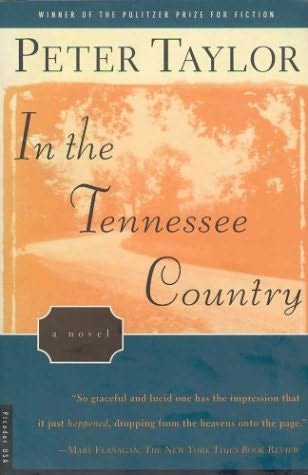
In the Tennessee Country: A Novel
Jesus said to them, "A prophet is not without honor, except in his own country, and among his own relatives, and in his own household." (Matthew 13:57 and Mark 6:4)
“In the Tennessee country of my forebears, it was not uncommon for a man of good character suddenly to disappear. He might be a young man or a middle-aged man or even sometimes a very old man. Whatever the case, few questions were ever asked. Rather, it was generally assumed that such a man had very likely felt the urging of some inner compulsion and so could not do otherwise than gather up his chattels and move on to resettle himself elsewhere.”
The words of Jesus remind us of a truism in life, well known for thousands of years, the process of “moving away” in order to “find” oneself, one’s true identify in life. Many people must “move away” from the place of their upbringing and their families in order to find their own place in life. In many instances, people can find their own place in life only a short distance from their home places, retaining strong ties to their families. In other instances, people find that they must sever their ties to their families, at least for some period of time, in order to find their own place in life, the place in which they can feel comfortable and grow in life. In some instances, people find their own place in life by establishing a career that is very different from that demanded by their families; in other instances, people find that they must become different people completely from the person they had been. This internal urge to “move away” to “find oneself” is intensely powerful.
In this book, the author describes the effects of the “moving away” process on three men – his cousin Augustus, himself, and his youngest son. All of these people disappeared from their own immediate families to one extent or another in order to find their own places in life. To achieve the “honor” that they needed to feel for themselves. To find the deep happiness that comes from having found one’s true identity. This drive to find inner happiness is very powerful, the inner happiness that can come only from finding oneself, the self that one feels is real, rather than that imposed by family and friends.
In this book, the author describes the “moving away” of three men, but he does not identify the “moving away” process, the deep need for self-identification and self-fulfillment. Indeed, he seems to have no clue about this phenomenon that is so widely known. He describes the process for these men as if it were some mysterious process common only to men of his own area in Tennessee. As a result, he writes what must be one of the most boring books ever published without the thought ever dawning on his mind that these men were not “disappearing” from life, but “finding” life. And the possibility never occurs to him that perhaps the Holy Spirit guides people along the path to self-identification and self-awareness, rather than their simply dropping out of life and disappearing. As a result, he writes a book that is utterly useless and utterly boring, when it could have been so much deeper, so much more enlightening, so much more interesting. What a waste, and what a shame.
Tuesday, October 17, 2006
Kennedy Center -- 2007 Season
October 14 2006 - Twelve Angry Men - Eisenhower Theater, 7:30 p.m.
December 30, 2006 - The Light in the Piazza - Opera House, 7:30 p.m.
January 13, 2007 - Who's Afraid of Virginia Woolf? - Eisenhower Theater, 7:30 p.m.
March 3, 2007 - Carnival! - Eisenhower Theater, 7:30 p.m.
Plus one other play in June.
December 30, 2006 - The Light in the Piazza - Opera House, 7:30 p.m.
January 13, 2007 - Who's Afraid of Virginia Woolf? - Eisenhower Theater, 7:30 p.m.
March 3, 2007 - Carnival! - Eisenhower Theater, 7:30 p.m.
Plus one other play in June.
Monday, October 16, 2006
Twelve Angry Men
Twelve Angry Men was written in 1954, but it is still emotional and relevant today. Twelve men, in 1954, trying to decide the guilt or innocence of a teenager who was accused of murdering his father. Reviews from the Washington Post and Washington Times are on the Kennedy Center website, so I will not repeat them here. I had seen the movie, starring Henry Fonda, several times, and found myself interested in the way the protagonist found fault with the arguments of the District Attorney and eventually convinced his fellow jurors of the teen's innocence. Of course, the play is not about a trial and the deliberations of a jury, but about the way in which our life experiences and prejudices affect the way we think and feel about a situation. The play is about confronting those prejudices and overcoming them, at least for a moment. Because I had seen the movie several times, and knew that it was an emotional, angry play, I was very hesitant to go to the play. I like to be entertained and made to feel good by the entertainment that I pay for. I like to feel happy. I like musicals. I do not like to pay money to see anger or other deep emotions. This play is about anger. However, I have season tickets to the shows at the Kennedy Center, and this play was one of the ones in the package, so I went. And again I soon found myself deeply interested in the intellectual puzzling out of the case, and the anger was not so much a distraction. The actors were wonderful, with Richard Thomas playing the Henry Fonda part, and George Wendt playing the role of the jury foreman. In addition, the play is one act, and less than two hours long, which made it much more manageable to me. At the end, the actors received a well-deserved standing ovation, and I was pleased that I had gone.
Subscribe to:
Posts (Atom)